|
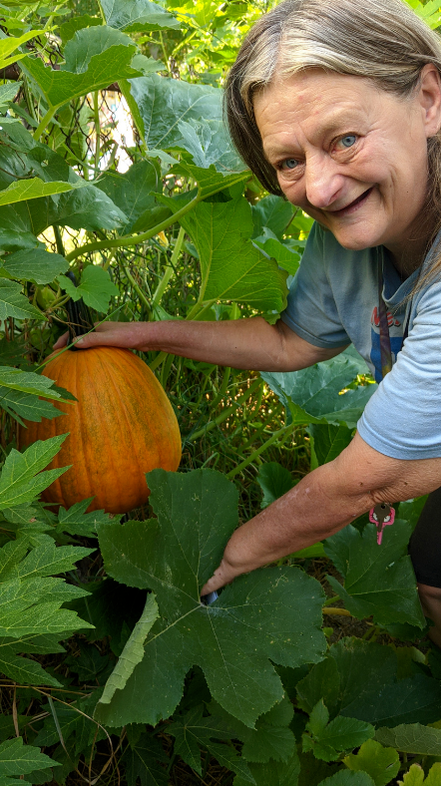
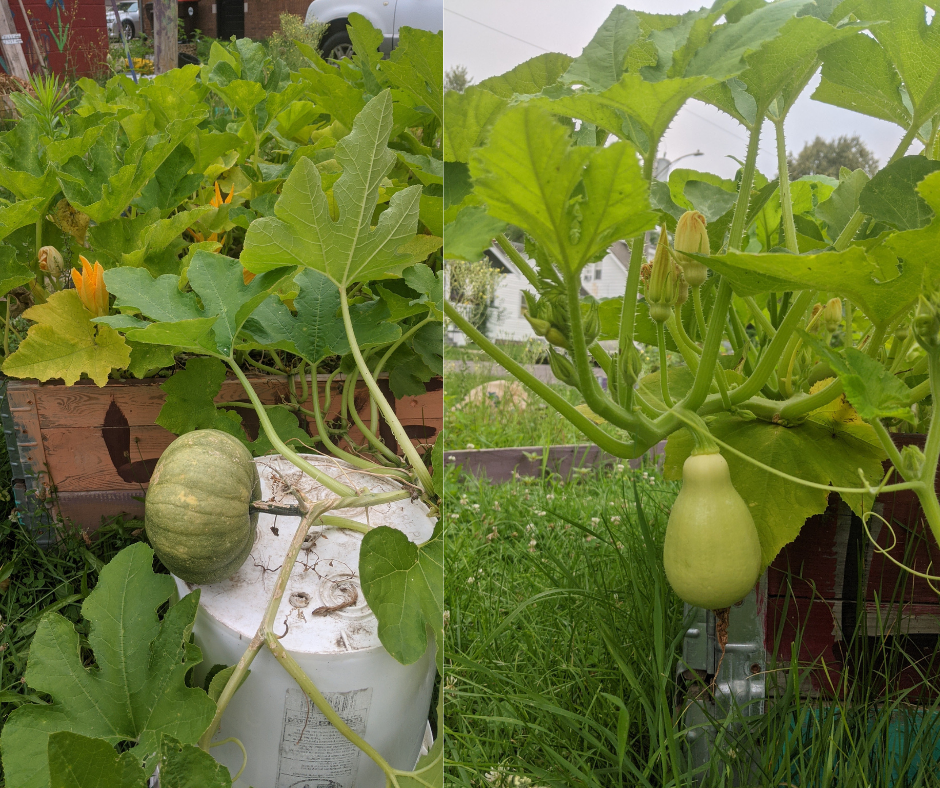
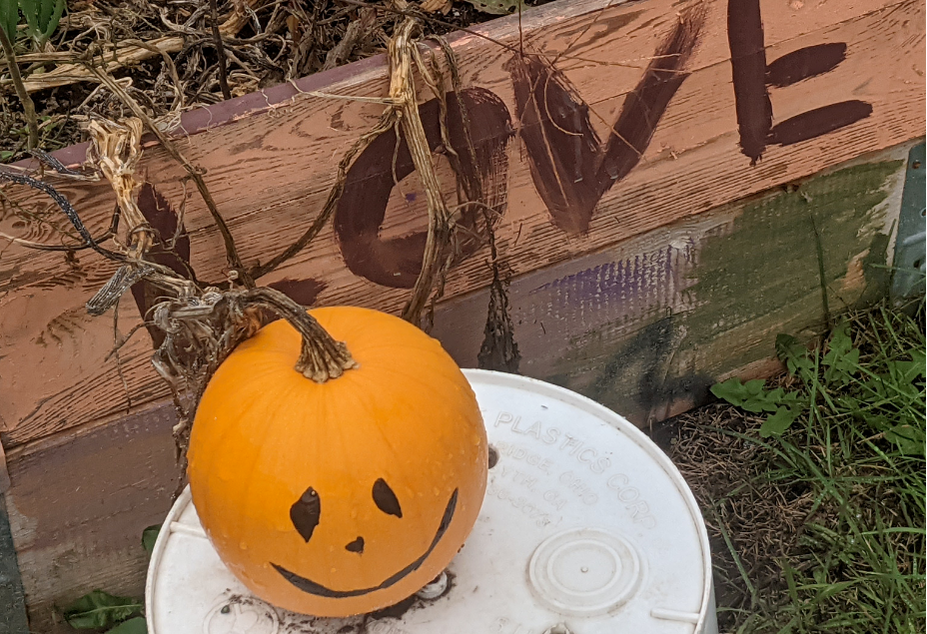
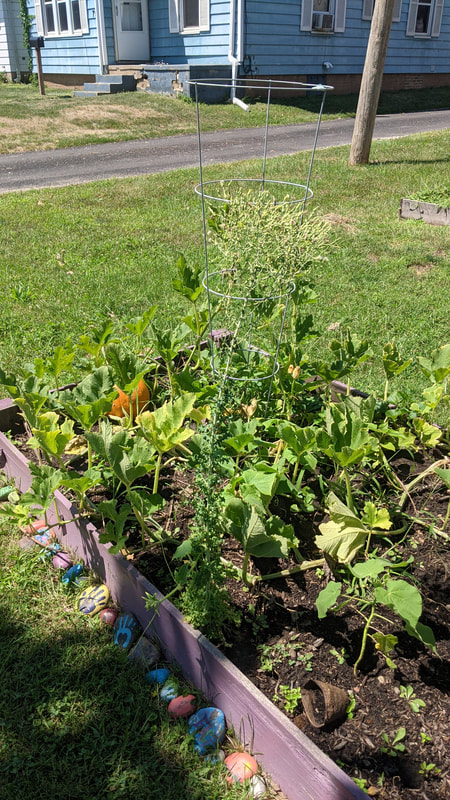
It seems like nearly every year I have been in Peoria, I have had the pleasant surprise of self-sowing squash and pumpkin. The first year it was butternut squash. Oh my, that was delicious. I got creative with many recipes, my favorite was a soup made with fennel root, coconut milk, and roasted butternut squash. Yum! I love volunteer plants, as much as I love my wild forageables. This year we had a bunch of random squash pop up around our chicken coop. In the late Fall months the previous winter, our neighbor gave us pumpkin and squash for our chickens, and voila come Spring we had a bunch of little squash plants coming up in our chicken run. I brought them to the Community House Garden, we popped them in our new boxes, and waited to see what we would get. There were a couple spaghetti squash and one tiny little pumpkin. Maybe it wasn't a bumper crop, but it was fun for the kids, and another example of God's powerful gift of food in this amazing natural world.
0 Comments
Our garden this year has had many many edible forageables, but that is not what this post will be about. As we were weeding at the Art Garage Garden, we saw someone had left an old chest freezer in the back alley. The compressor was gone and so was the cord, but it was in perfect condition to become a worm farm. Worms are amazing creatures that help transform yard waste into nutritious soil. So don't throw away your leaves, build a compost and create a worm farm of your own. 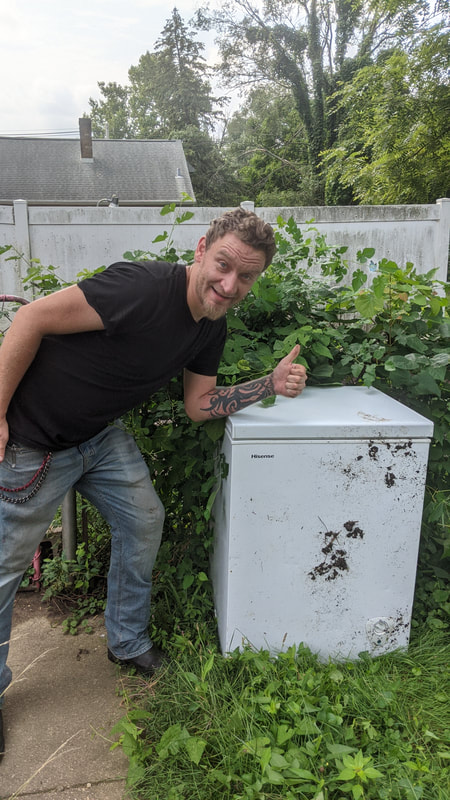 Purslane is found all over North America, but is particularly prevalent here in our area. It is delicious and super nutritious and deserve attention for those who want to embrace sustainable permaculture. These are hardy plants. They require little work on our part. What more do you want? They even are high in omega fatty acids. So no need to buy expensive supplements. I typically get purslane popping up in my potted plants, and I just let it live along with my flowers or other seedlings. Go ahead and give it a try. Here is a youtube link to some ideas of how to identify and eat purslane. https://youtu.be/aYVOqBh_pZ4 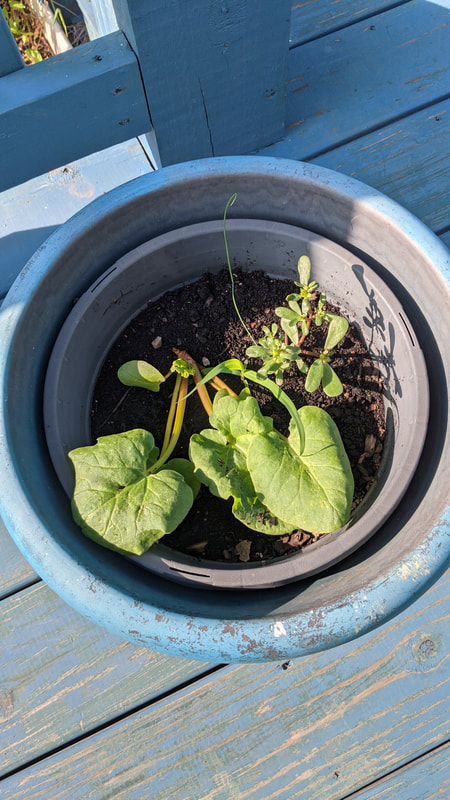 Purslane growing next to my rhubarb seedling. A power pack of nutrition! 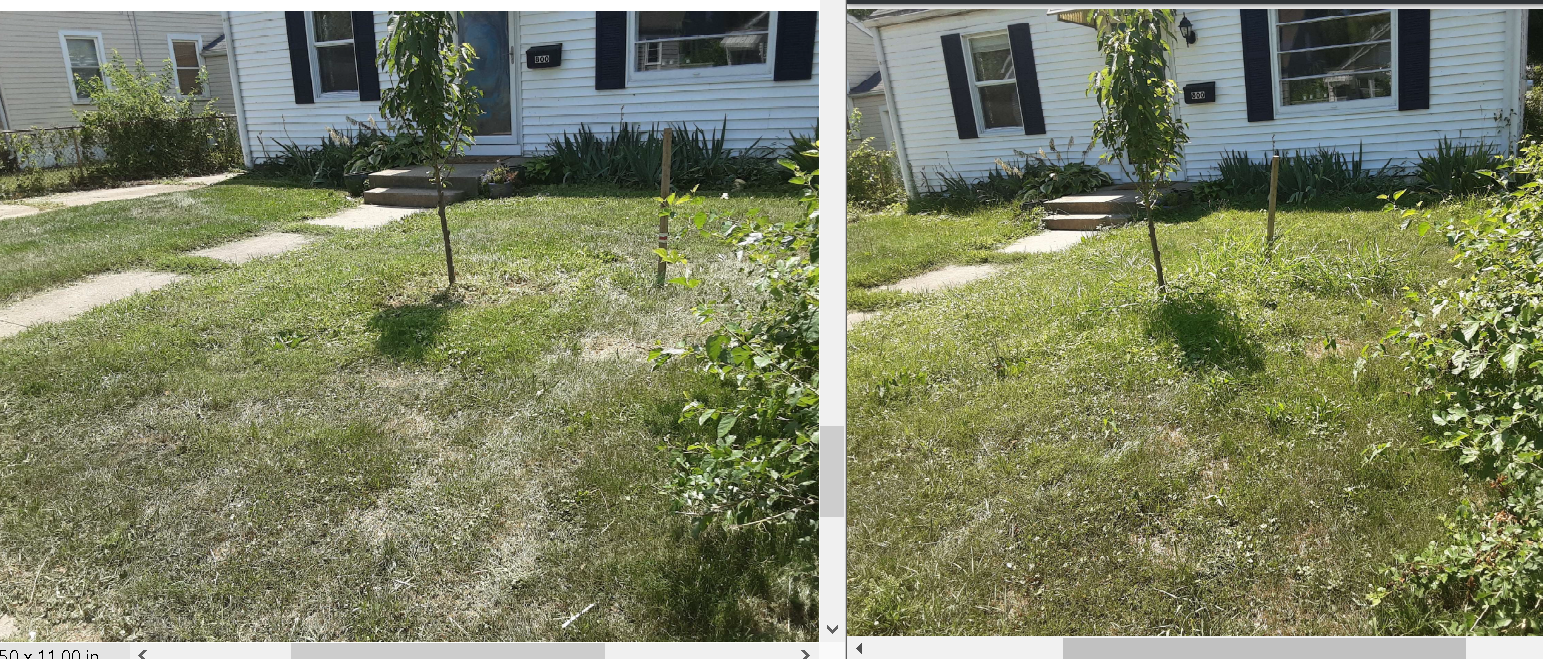 I finally got the pictures from the city, and I am having a hard time with the ones from the front yard, in particular. The image on the left is after they mowed. The one on the right is before. I can't see that it was that dramatic. Certainly, it you look at the red line on the image on the left, (after), it is clearly exposed, but on the right, you can see it is covered by grass. So how is this possible? It doesn't look that much different? The fact is that the pole is in a different spot. We have a bunch of holes in our yard, probably from the kids digging for worms. Nonetheless, it looks very fishy to me.
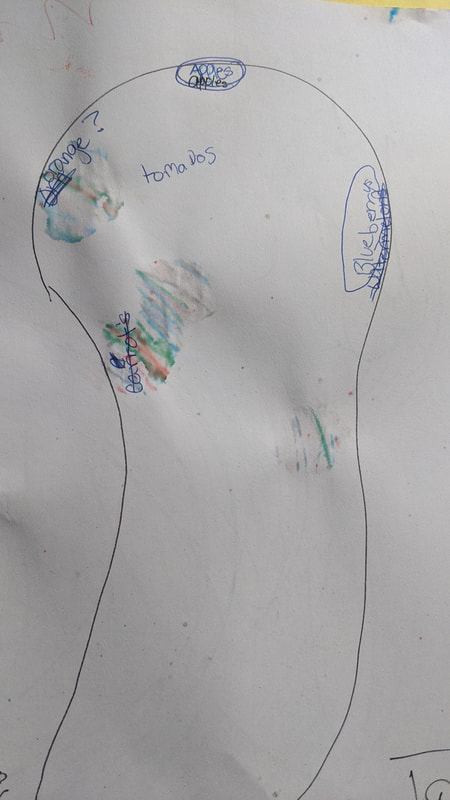
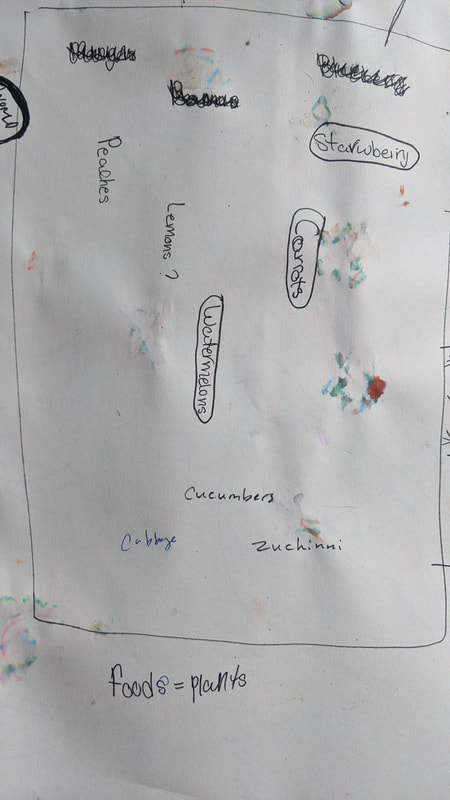
Sure there are a couple bushy spots of grass around where we planted the tree and a bit behind, but the entire yard is not that offensive to warrant what was done. I was also irritated that the backyard images did not include the garden in the shots. This is a rather convenient coincidence if you ask me. Needless to say, I am still highly agitated by this whole thing. It was unnecessary. And by the way, even after one-on-one conversations with Joe Dulin, the poison ivy is still there. I was wandering around the back yard at the Art Garage yesterday, and looking at the remaining stumps of the daisies that were cut down by the city, when I saw the black circles so familiar from our main garden. Did our city officials pour poison on my pollinator flowers? This may be the most painful part of the story. Not only is my garden destroyed for this year, it will be contaminated for years to come through the use of poison. I was recently watching the film Pollinators, though I had a hard time getting through the whole movie since it is heartbreaking to see thousands of dead bees. Here at the Art Garage garden we have always welcomed bees. We even have a sign. The truth is that Peoria has an indigenous bee population, and I was reminded of this when I brought home some squash blossoms from our pumpkin plant. These are delicious and nutritious and a great attraction for bees. The blossoms were closed since it was late in the day, and when I got in the house to rinse the flowers, two honey bees flew out. Why is the city choosing this very harmful approach to addressing what they refer to as weeds. Besides spraying in homeowners yards, they are spraying throughout the city. Personally, I do not have a problem in using these to address the poison ivy, which still hasn't been addressed, but when they are being used for the natural and indigenous plants in the area, I see a complete lack of awareness. How is this helping our community? Why is the office of Community Development concerned with plants that are harmless, or even helpful and not concerned with the massive problem of meth going on all around me? Let's get focused on the real problems, and start to work together for the true betterment of our community. 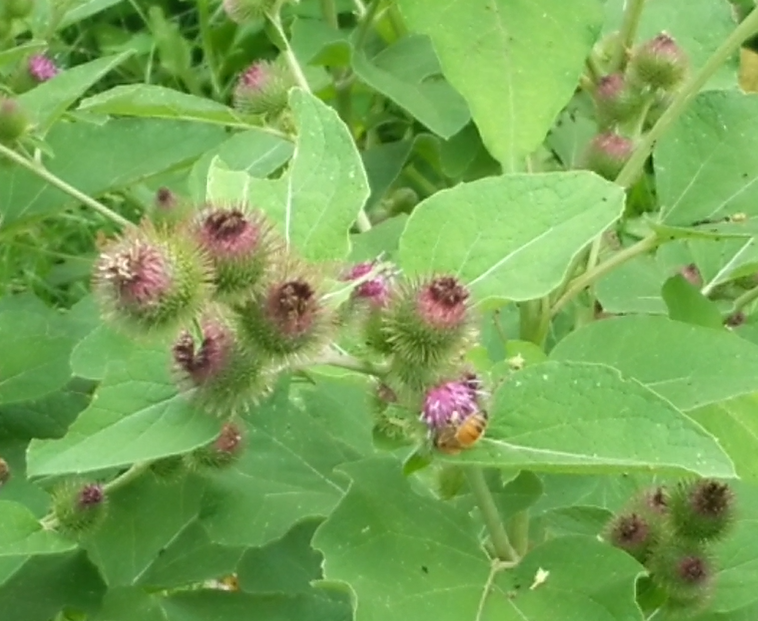 Bees on my neighbors thistle. We started designing our replacement garden and the kids mapped it out. It immediately went into an interesting conversation about climate, since bananas, mangos, lemons and oranges were all on our garden list. It also led to conversations about where the food grows, on what type of plants. It is often surprising how little our kids know about these things. When I worked in an alternative school on the South Side of Chicago, I was shocked at how naïve my students were. Although they had experienced such an intense life, having seen more violence than most people will ever see in a life-time, they hadn't experienced anything outside their four block radius. We went downtown Chicago, to Lake Michigan, only a few miles from where they lived, and none of them had been there. They have never been on the lake. The excitement was palpable. I also brought them to a farm, it was just outside the city. It had a pumpkin patch and a stream with a beaver dam, and grassy fields. One of my toughest students was falling back in the grass and laughing hysterically. Nature is so healing. We planted seeds and bulbs in the classroom as well, and I remember one day Damion came in and said, "Where did those plants come from?" I reminded him that we had planted the bulbs just a week or so ago, and he was dumbfounded. How is it our kids who have seen so much and experienced so much, are so disconnected from the earth and God's creation. The joy of connecting to nature and knowing Mother Earth takes care of us, when we take care of her, is an invaluable lesson. Even if our garden won't have mango or banana trees, it will provide beauty and food. It will provide the awareness of where food comes from, not the grocery store, but the earth. I love what Za'Kea wrote on our paper, Foods = Plants. Indeed, it does.
After the massacre at the Art Garage garden, I started to get nervous about our raised boxes at the Community House since the head of Community Development, Joe Dulin, said on air that garden boxes had to be maintained. But what exactly does that mean? You have to understand what is going on to be able to realize why the boxes look like they do. At the moment, the purpose of our garden is no so much about providing food, but rather a chance for the youth to observe the cycles in nature. Instead of focusing on making sure to plant perfectly spaced plants, the kids were allowed to do it themselves and then observe the results. We had a lot of clumps of radishes. The kids picked almost all of them, but we intentionally left a few in order to be able to collect seed. Looking at the garden box, it looks neglected by some, but to me it is the chance to teach. These are not neglected weeds, these are the source of our next harvest. This is the way to understand the cycles of nature. This is the way our next generation learns how to take care of themselves. So Joe, try to understand, what you see as weeds, I see as God's demonstration of abundance of life. 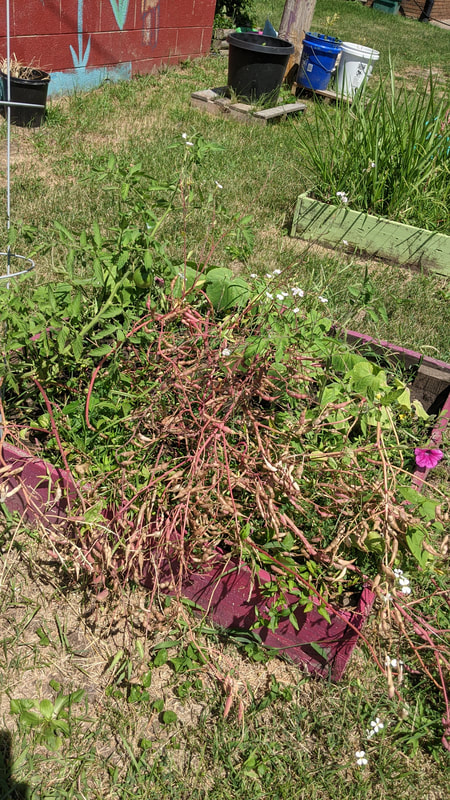
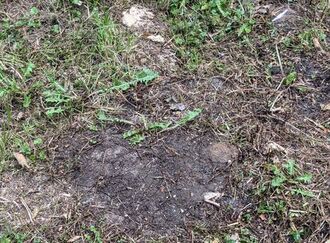 some sections looked like they were burnt or poisoned. some sections looked like they were burnt or poisoned. I wish I could have recorded some of the wise and wonderful things our community kiddos had to contribute to the conversation around what is going to come out of this difficult event. The message was clear though, we will make something beautiful together! We also made use of what we had. We collected some lettuce seeds, and radish seeds from the plants we had started at the Community House Garden. I love to let them see the full cycle. To plant, and collect seed, and plant again is so empowering. Also, it looked a lot like they had poisoned the garden behind the Art Garage. There were dark, completely black and dead areas that were in rather round shapes as if the did a big glug of poison from a bucket or jug. We just decided to rake up the whole area. There were a bunch of "volunteer" tomato plants in one of our garden boxes as well. We made use of these over crowded plants and brought them over to the Art Garage garden. Maybe it isn't quite as beautiful as it was, but it was uplifting to move forward from the hurt and disappointment. These types of experiences can either lead to depression, and helplessness, or hope and resilience. We need resilient kids! 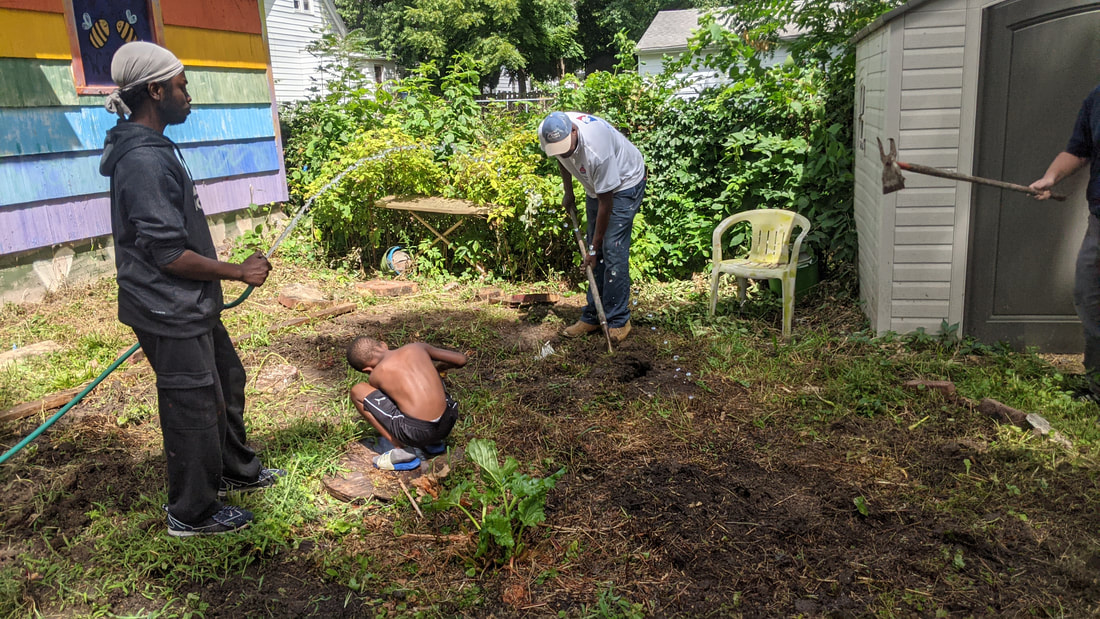 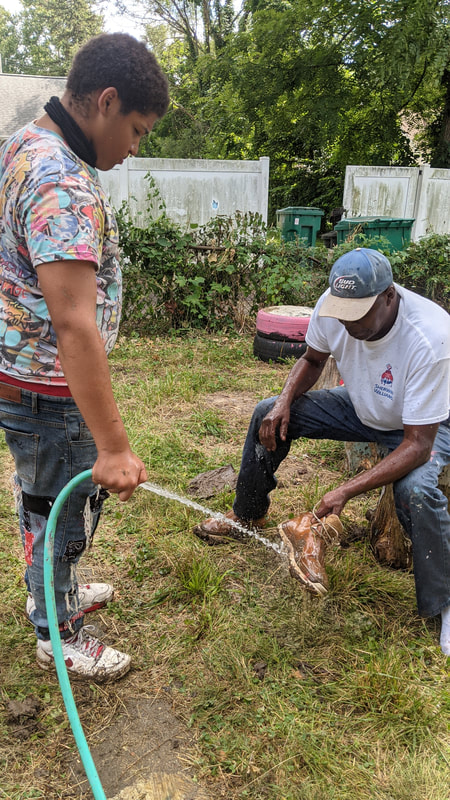 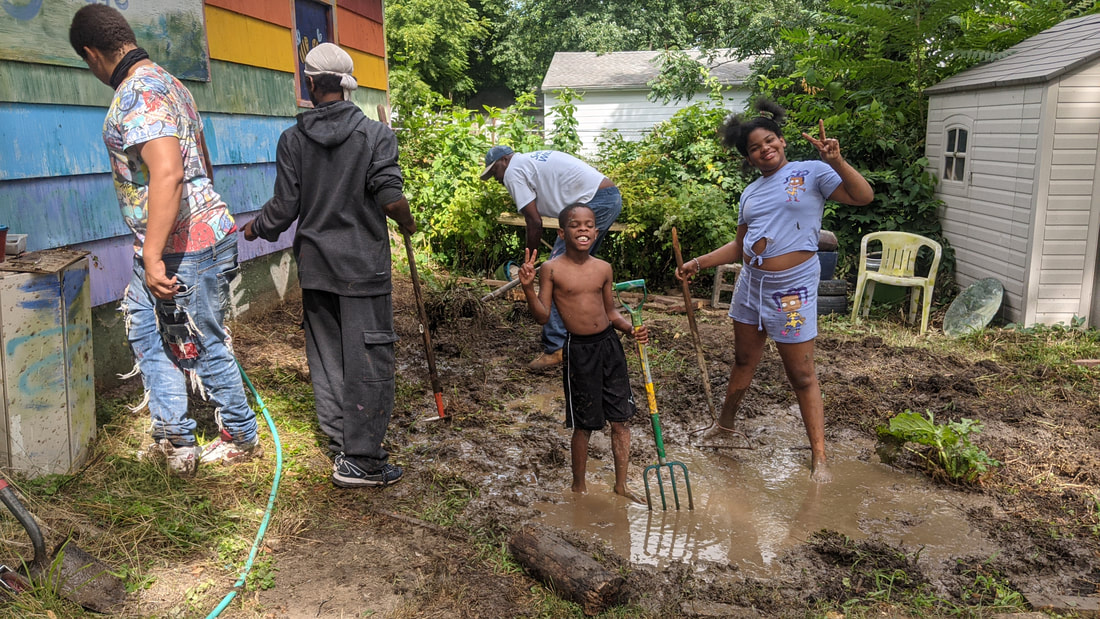 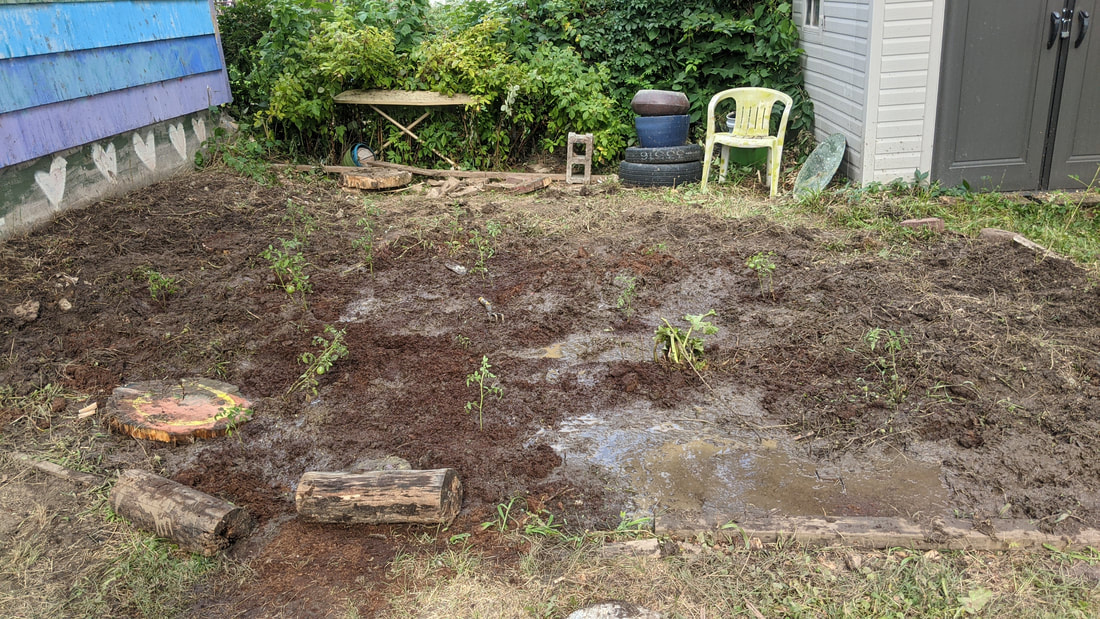 So it may not be a dream garden, but it was fun in the making. Just wait til next year! It was devastating to come home from an education conference and find our garden destroyed, but we have had an outpouring of support from our community, and the kids are ready to rebuild. Find out more here: https://www.centralillinoisproud.com/news/top-stories/peoria-community-garden-destroyed-by-city/ So, instead of our traditional First Apprentice programming, this Friday we will be gardening all afternoon. I had the kids come up with what they would like to plant. We might have to go over a bit about climate since we had bananas, mangos, oranges and lemons on our list for the new garden. Although heartbroken, there is a lesson in this experience. We talked about the rights of the city. At first the kids weren't sure. It seemed to them that the city can do anything. What about the right of the private citizens, the property owners, or even tenants? They had never thought of themselves as having rights, especially in relation to the city. The lesson of this was a powerful one for our Kindness Ambassadors. There is no reason to allow others to abuse or mistreat us. There is also no reason to retaliate with violence or destruction. We can respectfully express our anger through outlets like the media and social media. We can ban together and work to make changes that will prevent this from happening again. Hope springs eternal, like the beautiful abundant goodness of Mother Nature. 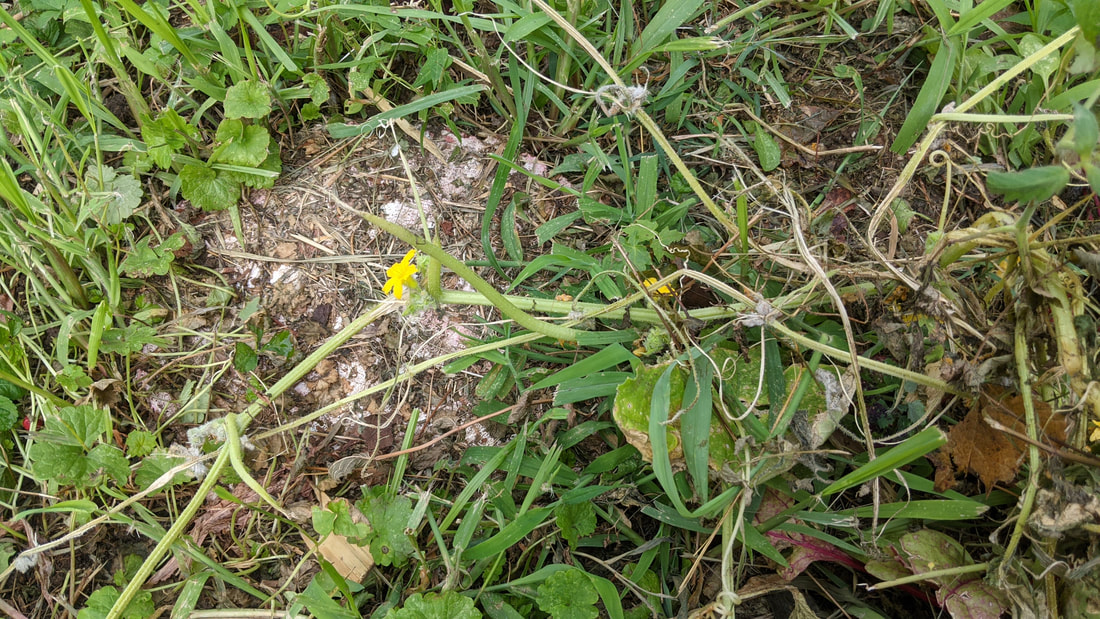 The vine of one of our prolific cucumber plants. Heartbreaking. I went away for two weeks to an incredible workshop focused on singing and literacy. When I came home, excited because our blueberry bushes were about ready to produce so many berries, I was horrified to find that the city had completely mowed down our garden. Mint, cucumbers planted by our Art Garage kiddos, rosebushes, the blueberry bushes, and even our apple tree were on the hit list. I literally fell on the ground shouting "WHY?" at the top of my lungs. Truly there is no explanation. Because my grass was too long? That is ridiculous. 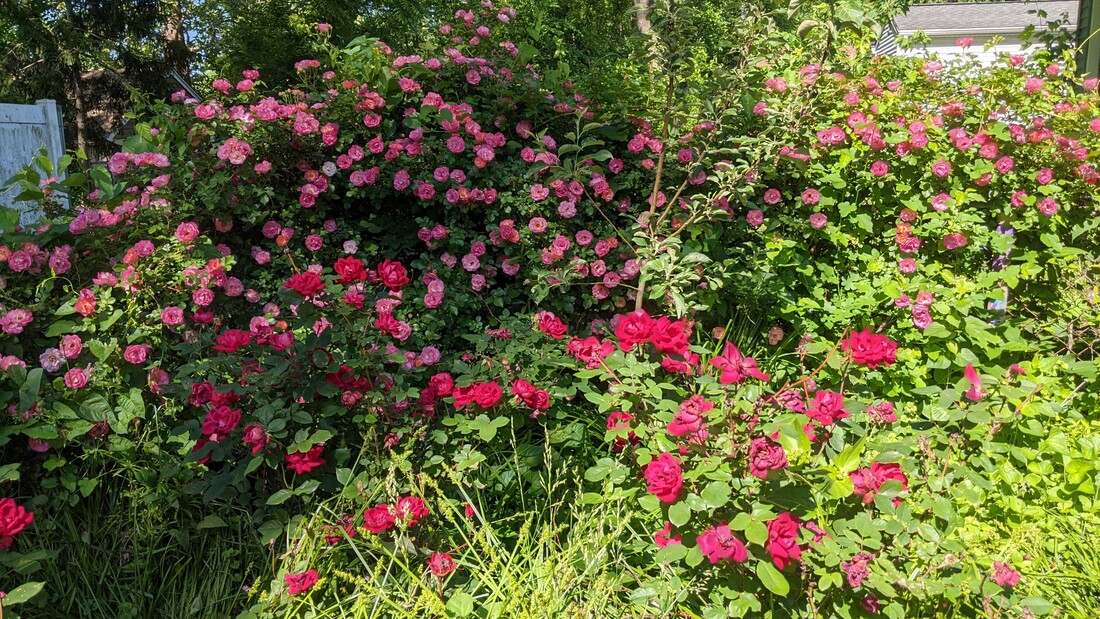 |
Eat FreeWhy pay for salad in plastic containers? Go forage in your yard! God it good! Archives
February 2024
Categories |
 RSS Feed